Sunday, January 02, 2005
filling in some blanks. 1st Slought Dot Org audio files. Olson's here, as I mentioned, and I just noticed Coltrane and Sun Ra interviews. looks like one of these sites where you do a lot of clicking afore you find the goods. some transcripts of the audio files, which is handy. 2nd: Spaceship Tumblers, more audio (L Carter, T Tost, as I did mench yesterday). I would ask for the text as well. I don't know the history of poetry readings in our modern sense. I know the Romantics would party down with poetry read and written, Whitman must've impressed his acolytes with his latest correction of the text, etc. Vachel Lindsay hit the circuit with his dramatic readings. what about Pound and the modernists? I suppose the Beats brought readings to popular public consumption. I read my work aloud now and then. sometimes to/for Beth, sometimes as part of the writing process. my own sense of reading wants the work to do the work, id est, I would prefer as the reader to temper performance. à la Michael Gizzi, who reads low key but crisp (low key I got but I'm probably not crisp). but I recognize other ways exist. anyway, stuff to listen to.


Saturday, January 01, 2005
cool listening links. I was really excited listening to Charles Olson at Slought.org except, unless I err, that the files can only be streamed, which is inconvenient for files so long (tell me that I can save them, but it seems that if you can't sit thru it all at once, you have to start again). Penn Sound offers contemporary writers and others who are somewhat physically dead yet still pushing the rock up hill. I've been listening to jam bands off of Nugs.net (Widespread Panic is cool), and with these reading files, this is is the prosperity of internet. oo, now I don't recall where I found Laura Carter and Tont Tost reading online but, see, the very contemporary is available too. what's the downside of that?






auld lanxiety
I don't think the coffee's going to get the job done. last minute we decided to buzz into Bawston to see the fireworks. drunk older couple where we got gas. older meaning somewhere between 41 and 63. the night is charged, and if they get somewhere, there they will be. we managed to avoid careering taxis and, say, do you think God tempers the wind to the shorn sheep ("It's dark, I'm drunk: I better step into the street without looking")? serendipity (a word that has now lost much of its serendipity) brought us to a parking lot on a wharf. a gneral murmur of horns and well-lit folks all around, but little had quiet partiers, thoughtful types. Erin adn I blew thru lots of virtual film catching the fireworks. at the last crackle of the bombarde we raced to the car, for if we waited we'd never get out of the lot. 4 years ago we saw refelctions of the fireworks off a window on the 10th floor of Children's Hospital. after whcih I was shooed from Erin's room (only one parent could remain in the room). and after attempting to sleep in a chair in the hallway, I finally found a gurney upon which to lay my head, sleep perchance to dream. ah memory.
Friday, December 31, 2004
I have an ongoing thing, just started, that I will be posting to my site. the 1st 3 parts are here. throng to the excitement!!!
a few poems of mine now up at The Poet's Corner. I link here to the site index, as it presents quite a roster of writers to scope out. 2 of the poems are from my book, the rest are pieces that mysteriously found their way onto my hard drive. thanks to Anny Ballardini for asking!
just to admit that I haven't a lot to say about the tsunami disaster. the press of blog's currency assumes immediacy of reaction. my reaction is numbness. I can't comprise the numbers. I feel like I should apologize for that. Erin is arranging a Magic card tournament, the proceeds of which will go to disaster relief.

Thursday, December 30, 2004
this piece made me think of Jim Leftwich. or Doubt, which is the only booklength of his that I know (so much for my expertise, but honest, I never claimed). almost pulpit dissertations. I really like that. offhand I can think of Peter Ganick and Ric Carfagna as writers who have worked that way, thinking in an assertion of language. Ganick has said that his poetry is philosophy, in the sense (I assume) of working things thru. by assertion not to mean directive but clarifying. Eldon's pressing invention is also a sort of diversion or tangent, inventing a language as she goes. it is quite striking in its naturalness, tho I understand it as experimental play. I hear Joyce here, but that's a sort of training, I suppose. I mean of me if not of her. it's kind of gritty on her part to post something this long. I think the blog expectation struggles with that, or anyway, the distraction of the blog's format works against the poem. which obviously is not a criticism of her writing, but the medium. and yet, it is this fresh, diurnal medium that allows these experiments. blogs can be and are a lot of things. it is too bad that they have a shelf life. I put R&S (my other blog) into pdf formnat because I thought it was more than thrown away. the reader gotta get as serious as the various writers, what say? that's what I noticed with Alli Warren's blog, that her words stuck, were firm if not constant (what language except dead language (politics) is constant?). she's not glib but involved. I aim for that. not to say blogs aren't muchly written by the shovelful, but those of inventive means, or whose language attention doesn't accept medium boundaries: these are strike force ambient rich considerable. we should go there, you and I.
a stray thought that AnnMarie Eldon, as well as all Acolytes of Allen who read this exciting blog, might enjoy reading Jim Leftwich's work. I found reading his lengthy work Doubt an onspiring (oops, but sic!)experience. I find Leftwich to be an artist of such an energy and expanse that you feel both challenged and invited. I think there is a lot of stuff in Leftwich's work that one can take to one's own uses.
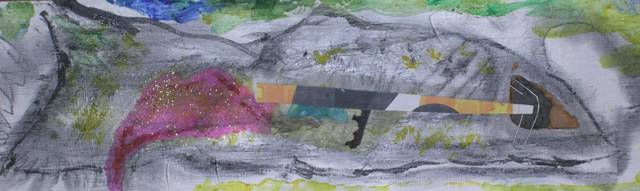
the comment to this post by Anon A Mouse asserts that AnnMarie Eldon's post is boring. Mouse hasn't the strong case of identifying him/herself, but what is boring anyway? it gets tricky, as it involves how much effort Mouse, or anyone, might put to the work in question. isn't there a semantic 'meaning' to the punctuation marks, just as exists with a conglomeration of letters? I will admit that the poetry I don't care for is that which I can't muster the effort for. take the average Robert Bly poem (and oddly enough, they are all average). when I've read them, and I earnestly did when I was scoping the landscape, I tired of knowing how these poems would perform themselves. I remember one book got to me, for it seemed like every poem was three numbered stanzas long. but it didn't seem like he worked within a form, more like he pooped out at the 3rd stanza. his numbering of the stanzas seemed like his way to push, but he just hadn't it in him. I deem that Mouse looks upon the punctuation of Eldon's poem and reads blahblahblah. which is one translation, but I don't get the feeling that it is an accurate one. the poem could be treated as code, in which each mark substitutes for a letter. or read the marks as we understand each to 'mean'. or savour the visual effect without regard to 'meaning'. I've been as guilty as Mouse with lazy attitude, but I try not to be smug about it. and it would be good to read any blog as a thing whereat one experiments.

Tuesday, December 28, 2004
Alli Warren's blog has stuck in my head, not in the sense of meaning so much as the writing's electric means. I am not a good reader, and know that there's a lot of meaning out there that I didn't and won't get. but I am a writer, and I guess I read as one. I am reading her ebook, Yoke, which Faux/e (link to right) published recently. it's been on my computer, waiting. this is quick writing, as maybe I am quick sometimes (I mean no faux comparisons). Tim Peterson is quick too, for that matter (an autre Faux/e), turns on a dime. his critical work can be dazzling with that quickness, but I digress, and so should you. quickness might suggest cleverness, and cleverness is nice, and Warren is clever, but I detect something further to point to. she allows herself to write 1st person, which I for one have tried to avoid. knowing my weakness. and she can dash with wit without presenting a torture or picture of drama. the book's 1st poem, "The Defense Rests", begins thus:
"Call in the rocketships and plenty of rocketfuel
We’ll go on living in spite of logic"
which I might compare to O'Hara but I could also say that S J Perelman had the zest to begin his pieces with similar sudden mise en scène. I am not up to in depth at this time (or ever, to be honest), just want to indicate. it seems like there is language between and amidst us, which is interesting to observe. I don't read off the screen well, find myself too easily distracted, else I'd've discovered this writing sooner. as it was, it seeped in, from her blog. many of her lines can stand alone, tho without a sense of disruption or disjunction. I guess the reader's eye adapts to her speed. despite the speed, there is no blur. that's the artistry (argh, what a word!) to which I would especially point. so okay, that's the best I can do for now. I better get dogged about reading the Faux/e line, and other available offerings, just to catch up.
"Call in the rocketships and plenty of rocketfuel
We’ll go on living in spite of logic"
which I might compare to O'Hara but I could also say that S J Perelman had the zest to begin his pieces with similar sudden mise en scène. I am not up to in depth at this time (or ever, to be honest), just want to indicate. it seems like there is language between and amidst us, which is interesting to observe. I don't read off the screen well, find myself too easily distracted, else I'd've discovered this writing sooner. as it was, it seeped in, from her blog. many of her lines can stand alone, tho without a sense of disruption or disjunction. I guess the reader's eye adapts to her speed. despite the speed, there is no blur. that's the artistry (argh, what a word!) to which I would especially point. so okay, that's the best I can do for now. I better get dogged about reading the Faux/e line, and other available offerings, just to catch up.
the 3 recent posts concerning David Hess's sister are really powerful. "there is no correct feeling," "I remember the eyes and not the heart staring at me." he writes here in an icy way, and I mean that in a good way. burning cold in the observation to temper the heat of his (anyone's) distracting emotion. the emotion is there, but not played. makes me think of Keats' words about the Egotistical Sublime. if David were looking for "a way to go" (maybe he's already going), this would be a direction.
regarding 3 posts down: when I use the word 'emblematic', it's code for saying that I am on a line of thinking. that is to say, following a path not seeing the map. to be comprehensive, to be fair, necessitates a sense of the map as well as the path. the countryside. the forest and the trees, blah blah. it is useful to probe, to go one way, but it is not 'the picture'. Jim Behrle is no emblem, and neither am I. not even Silliman, Dickinson, Mayer, Pound, Stein etc etc... 2 people, who I won't out, reminded me of this. I will add in my defense, as I have before, that everything I say here bears an implied question mark.
Monday, December 27, 2004
it looks like I successfully uploaded (oh the joy of using such a word!) the pdf version of R/ckets & S/ntries to my site. the file is 848 mb. please alert me if you discover some intriguing screw up. remember, I'm interestd only in intriguing screw ups.
Sunday, December 26, 2004
I worked for a wine store for a long time. one of the death knell signs I encountered in the biz (from which I am long since gone) was the rise of wine writer Robert Parker (a separate blowhard from the mystery writer of the same name). Parker cannily used a 100-point scoring system to rate wines. that act took the words away: he made wine criticism quantifiable. this system proved so successful that the Wine Spectator (a real rag if ever, the Rolling Stone of wine) started 100 point scoring too. customers began seeking only 90+ wines, as if that scoring system could account for personal taste. if you read a wine's description from these eminent sources, and compared the descriptions to the scores, you'd often see a disparity. I can recall Parker awarding a perfect 100 to a wine (1990 Château Margaux, I think) that he described as having the consistency of motor oil. sounds savoury, eh? if any wine were the consistency of motor oil, which there isn't, Margaux would not be the one. but who cares, he gave it 100. naturally I have a boring point to this notice of Parker. Jim Behrle may be joking about crush lists but if so, the joke is dead and dead. unfortunately, I think people take that shit seriously. any playfulness of the exploit has oozed away by now, and we're left with these names vying with each other. like it is a privilege to make the list. I am not interested in poetry as a mild social event that will go away. I mean the dependence on the social network to make it stay around. are you interested in that? judging mostly from her blog (I haven't read a lot of her poetry yet), Alli Warren writes with an idiosyncratic and committed language. that right there is more than Behrle offers about her or anyone. is this dumbing down or a prank gone on too long? Behrle's creepy list seems emblematic of the lazy critical sense that could let a Robert Parker dictate taste (and prices!) in the wine world. Behrle squawks about Silliman's opinions from on high, but Silliman writes within a poetic engagement, not some smarmy social swirl. not that it matters, after all, one way or tother. luckily enough, poetry escapes us all.
Thursday, December 23, 2004
thinking on, Jim Behrle's snipe at Ron Silliman concerning Experimental Poetry begs the question what Behrle himself adds to Experimental. Behrle's poetry is not 'new', not in that questing sense, and neither is mine. I think Ron Silliman has been extremely persistent on the question of form and discovery via experiment. saying that Behrle isn't particularly experiemental, or that I am not, is a descriptive not a qualitative evaluation. I'm content to be less than clever in experimentation if I can do what I do well and better. to suggest that Silliman is somehow old hat is to miss something pretty large.







Wednesday, December 22, 2004
Alan Sondheim queried Poetics list about whether anyone is reading his work. well, he knows some do, for whenever a brouhaha developes, thrice yearly like clockwork, concerning his steady posting habits, he always gets plenty of defenders. okay, I am assuming he asks this sincerely in the sense of not being a voice or avatar. one person asked simply, why worry it. writers may get a glimmer of what readers get from their work, but response aint really a given. and why should the reader's reaction matter? I could credit Alan with with bringing in a nervous voice to his proceedings. I believe he is needy, however. I message ruled him because I don't want to feel guilty for not reading him thoroughly. taking a break from Sondheim. I have read plenty of his work.
Tuesday, December 21, 2004
4 years ago, winter solstice, Beth and I were married. we were married at home. prior to that we went to North Bridge in Concord and exchanged vows. we read a couple of poems that I wrote, and one that Sheila Murphy wrote (these were also used in the actual ceremony). a pair of squirrels frisked about in mating merriment nearby. 2 pigeons did likewise. the male strutted while the female danced circles. 9 days later, penultimate day of the millennium, Erin and I had a snowball fight in the first serious snow of the year. I snuck up on him, causing him to stop suddenly and change direction. he slipped and fell directly on his knee. he broke his femur in 3 places. the 3 of us spent the next 9 days in Boston Children's Hospital. Erin endured a lot of pain. 3 external pins were placed in his thigh. because he was still growing (still is), a cast wasn't appropriate. the pins were steel rods thru to the bone, leaving open wounds. twice daily till May, these pins and the wounds had to be cleaned to prevent infection. well, while in the hospital, one pin site began to look, as the surgeon said, soupy. at that time the ambulance to bring Erin home was on the way but had to be cancelled and another surgery done. the bad pin was removed and 2 replaced it. the wound was plugged with bandage. the intern (not the surgeon, who was cool), came to look at the bad pin site. he said to Erin, this is going to feel unusual. then the intern pulled the bandage from the wound, several feet of it. Beth and I held Erin, who was screaming. Jesus! Erin had a morphine drip that he could control (regulated so he couldn't OD). one time he called out, "Beth! Allen! look what I can do". he was bringing his finger to his nose and going cross-eyed. slightly whacked out. another time he said, "this morphine is pretty good stuff!". Beth and I said "uh oh". today Beth and I go to Concord Bridge, the one Emerson called Rude (tho he never saw this bridge, nor any bridge at that locale), to renew our vows.
Monday, December 20, 2004
this book is semi-important on the ramparts of esoteric current by the next pool delivery. this book is free like the wind when you park your park there. this book is a reaction to my needing a good read or something else easily squandered, dear and all. this book is something like can you see my payemnt?
review requests!!! give me the fuckin' book free. give me a paragraph on leeches. hey, I'll be great advertisement. truly, this is lean kabobs.
whether Ron Silliman has removed comments from his blog or the comments box provider is cuurently down, either way: what about CURTIS???. I hope he's okay. is he lost in the ozone, or limbo, or is it like in The Matrix, or that early Arthur C Clarke story??? Curtis, if you make it out, please tell us all!!!
social notes for a busy week
I refused to help Adam find Colby and Liza after Liza had me give Adam a note stating that she and Colby will never return to Pine Valley. Greenlee and I wondered if Kendall had been poisoning Greenlee. Babe, Jamie and James are in New Orleans. I continued to let Mike think that Simon and I are happily married. After surviving a plane crash, Rafi and I found shelter in a mine shaft. I'm using a hypnotized Emily to taunt Rosanna over losing Cabot. I assured Tom Ridge that he is part of the family after Ridge lamented that he doesn't feel part of the Forrester or Marrone families. My friend Paige agreed to flirt with Deacon in an attempt to cheat on Jackie. It was learned that the mystery person secretly injecting me with drugs is working for Tony. I insisted that Chloe get treatment to restore her beauty and singing voice from a doctor near Salem. Billie and I searched Tony's castle for our daughter. I crashed my car while trying to call Luke via cellphone to tell him that Laura is still alive. Working with me, Connor took Nikolas's place before Nikolas could be taken back to prison. I allowed Kristina to spend time with Sonny. I unknowingly shot at “Ruth” (Harley in disguise), and Harley fell off abridge when the railing gave way. I was angry that Michelle used the cellphone that I gave her to call Danny instead of Ed, whom Sebastian thinks can cure him. I caught up with Babe, who along with Jamie had kidnapped baby Ace (James, who is really Babe's son). I continued to hide my memory loss. I took Todd to a mountain cabin after shooting him in his legs. I was stunned when Ethan admitted that he slept with Theresa, which means that the baby Theresa gave birth to could be Ethan and Theresa's child. I plot to get a semi-conscious Alistair to tell me the one-word secret that could end Luis and Sheridan's love. I urged Nikki to tell Bobby that Bobby is the brother of the boy Nikki accidentally killed when they were children. I refused when Nick tried to get me to return to work at Newman Enterprises. I gave Britney Spears a job.
Jim Behrle writes today on his blog: "That Ron Silliman is to Experimental Poetry as Ralph Nader is to American Politics: once useful and revolutionary, now merely in it for himself and an obstacle to real change. But that could just be the Mountain Dew talking." that just takes the blog stuff too seriously. even tho he sometimes sounds like it, Silliman is not etching that blog of his in stone. he's just throwing shit out, just as I do, and Jim Behrle does. it's Silliman's poetry that is the point, the cynosure of interest. Silliman's criticism helps define for him the poetry he writes. you see the same mechanism in Henry Gould's agitation, as well: battering away at bêtes noires while turning the beam inward. it's part of the process, and we readers needn't take it seriously in the sense of drawing lines. beating up on Silliman is low entertainment (tho those are Jim's funniest comix). people have been gunning for Ron Silliman for a long time. I certainly haven't worked under such scrutiny. Silliman self-promotes of course and I dunno who doesn't. Behrle's blog has proven a good career move, so he should talk. the comparison to Nader doesn't work for me, as I never saw Nader as a revolutionary. he was a lawyer, he did what lawyers do. Ron Silliman still works his curiosity. he has a large blindspot, which is a common failing, but he remains a key experimental figure.
Sunday, December 19, 2004
When Did George Jetson Become My Neighbour?
perhaps you are hip to this already. I'm using Acrobat Reader to look at the pdf file I just made. lo, there's a feature called Read Out Loud. HAL 2001 reads it in a voice capable of some inflection. he gets confused by some words and spellings, and insists on pronouncing each asterisk that I use in rows of five to separate poems, but it's pretty listenable.
the lesson is simple: do it yourself. so much of my work goes long to very long, because of the serial thing I run with. I have a manuscript that runs 800 pages in Word. a bit much for a chapbook. and tho validation from some publisher is an inescapable angst, I don't plan to let that issue clog my arteries.
I'm putting R/ckets & Sentries into pdf format. the blog format works while in process but the backwards chronology gets a bit dippy when entries no longer occur. I've removed date stamps and am twiddling with formatting. when I finish I will remove the blog. blogs that are quiescent are lifeless. if anyone, haha, wants a copy, I will send it, but it'll be heap big file. what I further mean to do is print and bind it (somehow) and offer it to the suckers out there. seriously, this seems like a nifty project. I have no skills in this way, so I'll have to make 'em up!!!
Saturday, December 18, 2004
been reading Sappho's Immortal Daughters by Margaret Williamson, published by Harvard University Press. I don't know how much of that information is actually correct, not having the book at hand, but I think I've ballparked it. it's about the perplexing variety of attitudes and understandings of Sappho over the many years. every era has its own Sappho. which is true of any writer that lasts the ages but piquantly so in Sappho's case. no wonder Stephen Vincent has been producing his Sapphic transitions. how Sappho's poems got to us is fascinating.
Black Spring Online. I bleeve I wrote a bit about this mag (print version) last summer. hte lineup:
Stephen Ellis (featured poet)
kari edwards
Jim McCrary
Steve Tills
Brent Bechtel.
Catherine Daly
Chris Murray
Layne Rusell
a good selection of writers. I want to particularly note Stephen Ellis's work. he's a friend, but I don't hear much from him lately. check out the poem "Hymn". this came to me as a printed postcard sometime ago. it shows the Ellis Method. I'm sure there's a Greek term for the rhetorical device that begins the poem; I love the effect. a looping and/or spiralling. I think of his work as inhabiting sentences tho if you could parse what he's done here, god love you. it's a tense running machine that he makes. oh, Chris Murray uses the word fricative in the poem "Baker's Dozen @ Lovin",confirming my sense that it is a dirty word: "in personal fricative".
Stephen Ellis (featured poet)
kari edwards
Jim McCrary
Steve Tills
Brent Bechtel.
Catherine Daly
Chris Murray
Layne Rusell
a good selection of writers. I want to particularly note Stephen Ellis's work. he's a friend, but I don't hear much from him lately. check out the poem "Hymn". this came to me as a printed postcard sometime ago. it shows the Ellis Method. I'm sure there's a Greek term for the rhetorical device that begins the poem; I love the effect. a looping and/or spiralling. I think of his work as inhabiting sentences tho if you could parse what he's done here, god love you. it's a tense running machine that he makes. oh, Chris Murray uses the word fricative in the poem "Baker's Dozen @ Lovin",confirming my sense that it is a dirty word: "in personal fricative".
Thursday, December 16, 2004
I've done some writing/art classes at the homeschool cooperative to which we belong. this is how I met Isaac, who was 8 when we met and now is 10. a very serious writer. his writing does a lot of processing of events in his life. his father left home for another woman, Isaac's recently suffered seizures. in his grand oeuvre (so far), there's a character called Lillist, who murders the protagonist's father, and the son strives to avenge the death. she's a witch. she gets killed but keeps coming back. ouch. later stories have been more diffuse, and include many murders and deaths. neither Beth or I have been able to do a class with him this fall. the person teaching him now is worried about his plagiarism, which is a terrible thing to do to him. he's always been honest about his source matrial. Lord of the Rings, Pirates of the Caribbean, Sherlock Holmes are all obvious sources. his usage is no different from Tolkien's usage of material. Isaac takes elements and makes them his own. he shouldn't be made guilty about the influence these works have on him. especially if you take the matter of Art out of consideration. he writes from a tremendous necessity. anything that might forestall that can only be detrimental. but as I say, he's original, no matter if he commandeers elemenst from other books and movies. I read a piece yesterday, more clearly a poem than most of his work. you get the residue of some painful story amidst a language of dire need. he said it came from the movie House of Mirth. which I recognized as am Edith Wharton novel, tho I haven't read it. you cannot glean the plot of the novel/movie from his poem, but the poem bears an incredible sense of love and loss. I wish I could make a copy of the poem. it's not the work of a child but a poet. his spelling is creative (think Lt William Clark), often hard to make out. I'd worry more about that than his originality, but I wouldn't even worry about that.
Buddha call
"When I took the ether my consciousness amounted to this: I put my finger on myself in order to keep the place, otherwise I should never have returned to this world"
--H D Thoreau, 1/26/1856
--H D Thoreau, 1/26/1856
Wednesday, December 15, 2004
Carla Harryman comments herself a distance from Ron Silliman's grand crayon marks. it is patently unfair to pit her against Brian Kim Stefans, good cop/bad cop. there's a Dylan Thomas quip about comparitive literature, to wit: compared to what? which is nicer, this unicycle or that box of matches? today Ron tells us that Devin Johnston "may just be the poet most deeply committed to the idea of repose, stillness & subtlety in American poetry since Tom Meyer." and his balloons are made of fir trees. superlative can be pretty stupid. who is 2nd best at all that? who is third? what league is this where these stats make sense? Silliman use cement in his criticism, to hold firmly, unbeatable, forever and a day. regarding his comments about BKS, Silliman did not go gingerly into that good criticism but leapt with a flunking splash. you call that a system? holy cow!!!
Jack Kimball was whimsical enough to mention my exurbian locale on his blog. a sort of confirmation occurred just minutes ago when Erin called Beth and me to the window, to see out back five (5) hulking wild turkeys. Beth had thrown a supply of sunflower seed around out there, on the theory that the squirrels were gonna get it anyway. the turkeys were feasting. I've seen a few turkeys around about but nothing this big. I figure 25 pound at the very least. they had some modest disputes over who got the choicest tidbits. they were unconcerned about the 4 of us goggling out the window. eventually I went outside and watched them. they knew they could take me so they paid little attention. they insouciantly marched into the next yard with a swagger that said if there aint food out they'll be banging on the door. I've seen deer often enough around here, hear coyote regularly and see their scat. a moose recently strode thru town, and a bear has been photographed, tho I didn't get to see these last 2. cheap thrills.
Tuesday, December 14, 2004
Ron Silliman twice uses the phrase "went to publish" today. since he did so twice, I'll assume that this isn't a typo for "went on to", tho I know I can be pretty steadfast about making the same errors again (teh teh teh, etc). its a curious verb choice. destination publish. well, it's not curious, a lot of people see Fiddler's Green in the very essence of publication, but Ron doesn't seem of that anxiety. by the way, me no mess with BK Stefan: hilarious response.
Monday, December 13, 2004
I don't write metric poetry but Mike Snider's discussion of enjambment has been useful. there are skills involved in poetry, not juts lucky inspiration. I think in terms of enjambment when I write in lines, how the syntactial event slides over the end line. I got that from Creeley, not to blame him or anything for my failings. of course, Pound told me to read Robert Browning like prose. that was a help, kept me from galloping past the meaning.
Brian Kim Stefan in the Blue corner and Ron Silliman in the Red. Ron started it. then Brian made return of the blow with right good will. Ron sounds a little out of his water. I am not comfortable outside the book and page, a lot to do with my ignorance but I think we can allow for taste. it's good to look at one's own resistance. the presentation of Harryman's poem didn't really add much to it, as I see it. there's not enough evidence given by Ron to make his point. anyhoo, interesting to see lances crossed. there's new stuff going on out there.
bedad, David Hess sends us somewhere different. I read this book lo these many many, under the spell of Steeleye Span and some of the weird ass elf-laden folk songs they rendered. wow, tho, we're talking the scholar Evans-Wentz, who was possibly the 1st to translate prime Tibetan buddhist texts into English. some of the accounts in this are spooky. there's an Irish tune called Port na bPucai (don't trust me on getting the Gaelic right) which comes with the story that a fellow fell asleep on a elvish mound, a sort of portal to their world. when he woke he had this tune in his head. another tune, a well known one called "The Gold Ring", supposedly was given to a man by the elves when he returned a gold ring to them. I find this stuff fascinating tho it's been a while since I gave it any study. I am reminded of the picture book by Terry Jones (of Monty Python), which purports to be the journal of a woman who collects specimen of the wee folk. squashed between the pages are some of her prize acquisition. quite bizarre.
Sunday, December 12, 2004
nice list of titles at xpressed, including just released ones. I've been reading Lives of the Eminent Assyrians by Jeff Harrison. a number of these poems showed up on the Wryting list but I am stunned to see how many there really are. yet another busy writer. much of his writing is narrative-infused, but these poems invoke an experimentation with statement. I think what that blurby-sounding phrase means is a jamming together of phrases to find something out of that. these poems have short lines, and the only punctuation Jeff uses is the virgule. the virgule incites a sense of balancing in my mind. not quite equation, but separating 2 elements of a whole. I recently mentioned Stephen Vincent's canny use of the half bracket. of course I, like you, have lately been giving Jackson Mac Low a read, and he uses some interesting punctuation. I really like these various usages. Jeff and I have been writing a long thing together in fits-like-a-glove mode for nearing 2 years. this work forces me to try different ways of proceeding. Assyrians challenges me now, in the sense of exciting me, to try a less narrative approach. those virgules perform, as I said, a balancing of elements (like either/or). the slash also firmly demarcates a phrase, yet at the same time, allows for serial reading. you can thus read severally: one-line poems, poems that fit between the slashes, poems that fit the page (each poem is a page long-- they all seem about the same length, so I wonder if a procedure is involved), and a 164 page poem. I'll have to print the lot out to get a better look. in august I ended Digital, and just recently capped off Rockets & Sentries. I've been happy to go without long project for a bit but now want to start again. and I want to step out of my usual. my reading time has been squeezed lately but I jumped to look at Jeff's work (among many attractions) because of a kinship I feel. I hope i can write uintelligently of other titles later. plumb tired now.
Saturday, December 11, 2004
Jackson Mac Low's statement, quoted at Watten's Weekly, brings to mind what Phish do (did) in concert. the group will give a clue, such as plays a few notes of a tune, or gesture in some way, which those in the know recognize as a signal. they then do whatever act like whoop or turn around that the signal signifies. one must be among the cognoscenti but the Phish community is about sharing that. a situation is created. as with JML, I see the sitch loaded with political meaning.
J Mayhew and T Peterson on being a poet. took me maybe 2 years before I would admit to myself that I was a writer, that I wasn't just kidding myself. quite some while after that that I would offer that as what I did. especially with the assumption that the act aint real if you haven't published. the ugh question if ever one's being a writer leaks out: what sort of stuff do you write? the stuff that a person could read, I guess. to say poetry brings that loaded, self-indulgent image. my friends and I did a little publication in high school, and in doing so met a fellow who, as he declared, wrote at 3 o'clock. my friend credited this person's poems to Three O'Clock Brown. I rarely use the term poet on myself. it's more like an honorific, and a limitation. I write other than poetry. OR I am being profligate with the definition of poetry. whatever. my 1st publication was in This 3 in 1972, with Grenier, Creeley, Coolidge and, by gawd, the pre-comment box Curtis Faville!!!. my 2nd publication was in a broadside put out by Stephen Ellis's Oasis Press in 1999. he has published an enormous number of writers this way. he asked for 6 poems, printed 50 copies, kept one for archive purposes, and the rest were for me to distribute. of course I still have some. it is a tickle to publish in print, congrats to the Mayhews. it's evidence that you weren't joking when you said you were a writer. I think publishing online is still considered circumstantial evidence somehow. my grief with online simply sits with my inability to read off the screen for long. and I won't even tell you about the last time I read online work in the bathtub...
Friday, December 10, 2004
...Robert Bly, surely one of the worst minds of his generation. it is surprising how fair this assessment is. were Bly just incompetent, like, say, Amy Clampitt, you'd just pass him by. but he's this big ass voice, thundering with dull. my Spanish isn't really mine but even I can tell that Bly's just scuffing up some good poets with his translations. I suppose we can credit him with some sort of 3rd or 4th rate openness to other cultures, in the manner of Rothenberg and Eschleman, but no, I'd rather not. and then that job of giving men their penises back, yikes. I guess even he was against the Vietnam War but his anti and Ginsberg's don't belong in the same room. reading his poetry really discouraged me, when I was much more insecure about myself as a writer. I thought: I can't write like that. thank gawd.
John Latta's rumination upon youth and age in poesy world rings well. Jim Behrle's satires of Ron Silliman's multiplex reading speak to the point that keeping up with all that is going on is a huge task. I never felt anxious about keeping up but for a long time read up as well as I could. now I keep my eye out on the poetry scene, but I'm reading elsewise as well. one does what one can and one does what one needs. someone recently quoted Gilbert Sorrentino, somthing like: if you write poetry when you're 20, it's because you are 20; if you write poetry when you are 40, it's because you are a poet. I remember writers in high school and college who I knew were not going to be writers in their 40s. no need for smugness, but I persisted. anyway, I have said it before, but Latta sure reminds me of Edward Dahlberg, with his florid, cranky (and entertaining) style. Dahlberg wrote with a biblical lushness that belies his clarity. a nice pairing is Dahlberg and D H Lawrence re American lit.
fascinating, as I said before. those who haven't used a typewriter are missing out. I no longer have one, but the idea of using that (Weiner's) page is intriguing. I am not arguing against the convenience, as well as awesome potential, of the computer, and work done by hand, of course, has it own native energy. Weiner paints the page with words, and uses the red ribbon somewhat. I never saw the book version of The Clairvoyant Journal, but if it doesn't replicate the colour, then it misses something. I know that Little Books/Indians doesn't quite translate the sense of interference and disturbance with its typography. I mean it is rigid and lacks colour. some of John Bennett's work has a 3-dimensional quality. Rolling Combers (Potes & Poets Press 2001) subtly utilizes different fonts, plus John's lurid (and lovely) calligraphy, to create layers (hard to explain). Weiner's work similarly has layers. typesetting such work lessens the effects of these layers, at least for Weiner. these scans produce a much better sense of what Weiner was 'doing'. Bennett was working with the computer all along, there's no translation of his intent (well, less). see, for so long, writers worked one way, then saw their work changed when published. I don't know if Finnegans Wake should be read in its crayon version, as composed by Joyce, but I think it's worth considering how much translation of our work we need to do. I can't recall the name, or find, Grenier's boxed book, in which he shifts from typescript to handwrit. that's his recognition of the problem.
he's back and he's proud: there's a reason I kept C Annarummo's Arm Sasser link up. mimimalist isn't the right word, but trim and succinct work. none of which applies to my writing.
Thursday, December 09, 2004
an interesting Hannah Weiner link. Patrick Durgin has written what looks to be (I've only scanned it) a good introduction to Weiner's work, and several of her works are included, in original typescipts. fascinating. Jack Kimball wrote a good piece on Weiner and Alan Sondheim a couple years ago for Jacket. I must make a permanent link, for this is worth study.
Jackson Mac Low's death is a surprise as the pictures of him show such a trim person. I haven't read him well but have always identified him as an honourable presence in poetry. I admire that his experiments are engagement. I mean, his writing is 'difficult' if you are unready for it(which is a constant theme for me, I am much more disconceeted by the 'new' than I or anyone ought to be), but his writing bears such a strict intention to engage that it is hard to pass it by. I love his performance directions and explanations of method: so precise in a loving way. I don't know why the word loving occurs to me but it seems a most appropriate word for his work.
Tuesday, December 07, 2004
not exactly looking to crowd my list with more blogs, but I like Mike Snider's busy blog. thoughtful people comment on his blog, which is a plus, gives a nice percolation. the Ashbery questions he dished out sure roiled up the stew. I actually don't get why The New Yorker, in its dull wisdom, saves half a column for Ashbery once in a while, tho that is just part of the question why the magazine uses any poetry for column filler, when it already has those funny whatsis items to serve the purpose. my first meeting of Ashbery was Tennis Court Oath, the simple disjunctions of which threw me for a loop. I didn't know poetry could do that. Three Poems came out soon after, which I found difficult as well but more to my taste. a little before that, I think, Richard Grossinger read at Franconia. his prose really excited me. I mean, that he was writing prose, but not so much telling a story or explaining things. this was a breakthru for me. so the length and depth of Three Poems seems wonderful in possibility. I always thought the voice in Ashbery inherently lonely, but maybe that's a bit of too close to home. I had dinner with him and a couple of other students at Grenier's when Ashbery read at the school, as I am sure I've boringly recounted, and found him pleasant and sociable. he was pleased that I and another were Leos, like him, and related this to the (supposed) Cancer birth of O'Hara (which we learn in his bio was in fact 3 months earlier). christ that's the coolest story I have in my arsenal, I canna do better. I guess I ought to get intersting or don't bother. anyway, nothing wrong with Snider wondering about the appeal of JA.
Silliman Update
today, December 7, Ron Silliman called us darlings. unless he's just talking to Curtis Faville, it means he LOVES us!!! he really loves us!!!
nice long review of David Shapiro/Peter Gizzi reading by Analagous Reading impressario, Tim Peterson. you will find a link to Jack Kimball's erudite (remember to pronounce all 4 syllables) review there as well, save me from performing excessive linkage in the fairly wee hours. wish I was there. I'm pleased to see reviews of readings beyond who was in the audience.
Monday, December 06, 2004
Mike Snider's questions here are usefully provocative but. I would answer no to all questions, however I am not interested in memorizing. I don't ask that poetry be with me like that (whereas it seems I do with music). and yet I have my love for poetry, however tainted it may be (poetry and/or my love for it). having Ashbery's lines in my head, or anyone's lines in my head, including my own lines, is not a use I ask of poetry. these questions assume that people read Ashbery without enjoyment. why assume that? if MS didn't assume that Ashbery's readers were stupid, could he come up with answers to these questions? that would be a useful exercise. we all have our criteria, really, we do. and I am not even denying that Ashbery's work tends to blur for me. Flow Chart, as I wrote earlier, dragged on for me. still, I can list Ashbery poems I like, and articulate why. and for his part in A Nest of Ninnies, kudos galore.
well, I'm going to be self-referential here, so you might wish to take precautions. because I am looking at the stuff on R/ckets & S/ntries, making me think. the Poetics list bubbles currently upon a query for serial poems. I think the correspondent sought long-in-the-making grand d'oeuvres like Cantos or Maximus, and people pulled out everything they could think of, sorta like. I think a serial poem might depend on chronology. someone cited Spicer's definition, but I don't know that. I like the effects of chronology, t any rate. much of my work leans on that. altho the recent series I did in NJ I intentionally took ome out of order. anyway, boring you (1st I imagine a reader, then imagine I bore him/her), looking at the chrono field of R&S. gives a graph of my experiences, I guess. for the most part not specified but still. a patch of poems that came after Beth and I went to WV to deal with her father's death, I wrote quite a lot. the facts of my life aren't interesting per se, we all have facts. but it is the conjunctive tension between them facts (which could be as mild as what I was reading) and my writing that is compelling. my writing, anyone's writing, coming out of that. sometimes I am 'heartfelt', sometimes ironic, sometimes oblique, sometimes flaky: different ways to deal with the facts. because it seems like facts instigate the writing. sometimes declarative, as in dealing with Beth's father's death. more often it is less definable, some adventure of language. I am not speaking of this particular to me. we write towards something definitive, not as in answers but something solid or complete or I dunno what. something. R&S was practice. I would get antsy to make at least one daily post, even if I didn't feel I had something to 'say'. I definitely believe in the practice of writing, with a novelist's kind of daily grind. not that I really work like that, I just like to see work done everyday, not waiting for those effusive, concentrated times. I haven't really looked at R&S (my gawd the typos and misspellings!!!), but I wouldn't want to cut it down. the weak poems have a point. I don't mean the reader must exult in that, I'm talking process still. I wrote this stuff casually, throwing it away really. I didn't review them much, was content to let them sail away. now I am pulling them back to shore. I wrote them, all right, but didn't invest in them in that way of writerly dedication, just wanted to get some work done.
Sunday, December 05, 2004
"The Golden Rue Devils Bring" by Jeff Harrison
I gargantuan, they in the skies
yet lower they to the ground
with gold the moonless were golden, --
me: blooded for thee a sight to enjoy,
thee, Virginia, moonless thee
if ape thinks of a palace, behold,--
at the very-most least an aviary
for letters' newborn steeds!
I, more, I inched all drenched
blooded for thee a sight to enjoy
but glumly she bird then just die
* * * * *
I don't really know why I asked Jeff if I could post this one particularly, because so many of his poems interest me, and for that matter, quite a number of pieces by others on Wryting could be picked out. I like the language here, grand and slightly ludicrous. I divine that Jeff bears an interest in English poetry 17th to 19th century. I like the tension of the lines, with their defiantly firm yet skewed syntax, and implosive beat. I hear it declaimed slowly, portenously, I suppose. and Virginia, which he frequently mentions in his poems: a person, a place, a state of mind?
yet lower they to the ground
with gold the moonless were golden, --
me: blooded for thee a sight to enjoy,
thee, Virginia, moonless thee
if ape thinks of a palace, behold,--
at the very-most least an aviary
for letters' newborn steeds!
I, more, I inched all drenched
blooded for thee a sight to enjoy
but glumly she bird then just die
I don't really know why I asked Jeff if I could post this one particularly, because so many of his poems interest me, and for that matter, quite a number of pieces by others on Wryting could be picked out. I like the language here, grand and slightly ludicrous. I divine that Jeff bears an interest in English poetry 17th to 19th century. I like the tension of the lines, with their defiantly firm yet skewed syntax, and implosive beat. I hear it declaimed slowly, portenously, I suppose. and Virginia, which he frequently mentions in his poems: a person, a place, a state of mind?
I've been reading Christophe Tarkos, who died recently. Roof released a selected of his work in 2000. he was only 40. his 1st book appeared in 1995. at the time of publication of this volume, he'd published 25 books. obviously the selection barely scratches the surface of that output. one might note a resemblance to the work of Alan Sondheim. really wound up, intense production. challenging and experimental. there's a solid intro by Chet Wiener, who is also one of the many translators involved, which include Stacy Doris and Norma Cole. great energy. Charles Bernstein wrote to the Poetics list: "Our poetry has suffered a blow. But Tarkos's work already shows a means for recovery." I dunno why people say things like that. obviously Tarkos gave us a ton of stuff, so that 1st sentence sounds overblown. and that's assuming Americans (if that is the 'we' he means) are that interested in what the French are doing. we should be, of course, but I don't think we are. I find Tarkos's work worthy of study, but the 2nd sentence sounds overblown too. I really hate eulogies.
I'm saving R/ckets & S/ntries to my hard drive. that means copy the archives and, maybe this is anal, reverse the chronological order, so that earliest post is 1st not last. Blogger should allow the choice. I like the project of R&S. it gave me a daily push. blogs are process. they depend on fairly regular postings. there's 600 pieces on R&S, but I get the feeling that once I stop adding to it (which I guess I have) it will lose relevance. same for this blog, for any blog. I'll probably deep six R&S once I've gutted it. I mean to start something else but I don't know what. how about a fuckin' crush list, something smarmy like that?
Saturday, December 04, 2004
I may stop R/ckets & S/ntries, feeling like I've played it out. I sure didn't expect to write a talk blog (this here one). I want to try something different, tho I dunno what. R&S began with the name, that's how Blogger does things. and having that name, those words, I set forth. 600 some poems with R and/or S in mind as I wrote. I meant it as an exercise.
another blog by Jukka. a presentation of mail art, which is a nifty form of collaboration, tho sooth to say I've never done it. I missed mimeo too. there are a lot of people out there just cranking away, making art. it's an affirmative energy. you know, I am taken by the large selection of blank books and journals at Barnes & Noble. people presumably are filling those things. poetry, diary, notes on the search for the Holy Grail or the map to Pirate Eddie's pirate treasure. I use those things occasionally, especially travelling. with mail art, the sense of audience is very specific. which digs into some of Henry's (and my) sense of poetic directive. that the interchange of mail art lessens the desperation of publication, for iut becoems a sharing between friends (or at least likeminded). gifts more than competitions. even tho there is no market for poetry in the sense of money, there's this highly driven marketplace, of people trying to be seen and heard. the drive of that scene can bend people. so that a need to please arises. I suppose this is the decorum of which Jonathan Mayhew speaks. some of that is zeitgeist, the mode of our listening in the current noise. mail art is a giddy pleasure, you can see that in Jukka's site, in Ross Priddle's. a comfortable sharing. vispo (which mail art is a part), as I was saying re Geof Huth, is playful. the play is serious. a great visual adventure.
Friday, December 03, 2004
beguiling Sapphos by Stephen Vincent. Armand Schwermer was joking some in The Tablets, part of their charm, but the sense of what is left out also resonates. as here with the Sapphos. the tautness, mouth agape, partially worded. that may be why I like the half bracket SV uses. visually it's unusual, not just the uncompletion, but that it faces left, as if containing nothing, not even the possibility. yet there is an outside to that boundary, where the poem words itself.
Brian Kim Stefan givesn us Howl One Letter At A Time. literally! brought to mind the great bit by the great great Bob & Ray, The Slow Talkers of America. in which Ray impatiently interviews a dedicated member of this club. BKS's piece is rather transfixing. there's a click as each letter appears, at irregular intervals. and it goes on.
rather than wiggle in the comments box, I'm just too LARGE for that, I'll write here concerning H Gould Enterprises's fitness tests for poetry, which I guess I'll quote:
"1. failure to acknowledge the difficult technical challenges to good writing in general."
Whitman and the Beats gave some people the idea that poetry just was a matter of exultant overflow. sometimes that works but a lot of time, burbling logorrhea results. I did that for years, god help me. doesn't seem like Rimbaud did tho. there's some lack of detachment in this failure, as in: attachment to the assumptions listed below.
"2. failure to recognize the serious themes of great poetry : magnanimity, justice, vision (Dantean terms).
less sure about this point. there's a lot of highly localized poetry about Me and My Feelings out there, but there seems to be plenty of poets who recognize the listed themes as essential to their work.
"3. assumption that poetry is a means and not an end : a means to social conformity & worldly success."
I sure enough believe this. I believe there's a poetry fast track out there, and a lot of riders, hungry nervous eaters. crush list be damned. I see a lot of anxiety about publication, and not just publication but right kind of publication, ie, not self-published, not online, but 'Real Publication'. people sweatin' their reps. there aren't many Dickinsons out there.
"4. assumption that poetry is a means and not an end : a means toward expressing sour, narrow-minded resentments, rather than exploring paths toward the amelioration of conflict & suffering."
I think a lot of poets express sour narrow-minded resentments, but I don't think Poetry does. which, I know, sounds rather stupid to say. what I mean is: I don't see that stuff so much in the poetry itself. and frankly, good old Berryman was full of that too, so was Pope, Pound, Byronshelleykeats, etc. the crummy poetry we read has more to do with the 3 other tests, perhaps especially #3.
"1. failure to acknowledge the difficult technical challenges to good writing in general."
Whitman and the Beats gave some people the idea that poetry just was a matter of exultant overflow. sometimes that works but a lot of time, burbling logorrhea results. I did that for years, god help me. doesn't seem like Rimbaud did tho. there's some lack of detachment in this failure, as in: attachment to the assumptions listed below.
"2. failure to recognize the serious themes of great poetry : magnanimity, justice, vision (Dantean terms).
less sure about this point. there's a lot of highly localized poetry about Me and My Feelings out there, but there seems to be plenty of poets who recognize the listed themes as essential to their work.
"3. assumption that poetry is a means and not an end : a means to social conformity & worldly success."
I sure enough believe this. I believe there's a poetry fast track out there, and a lot of riders, hungry nervous eaters. crush list be damned. I see a lot of anxiety about publication, and not just publication but right kind of publication, ie, not self-published, not online, but 'Real Publication'. people sweatin' their reps. there aren't many Dickinsons out there.
"4. assumption that poetry is a means and not an end : a means toward expressing sour, narrow-minded resentments, rather than exploring paths toward the amelioration of conflict & suffering."
I think a lot of poets express sour narrow-minded resentments, but I don't think Poetry does. which, I know, sounds rather stupid to say. what I mean is: I don't see that stuff so much in the poetry itself. and frankly, good old Berryman was full of that too, so was Pope, Pound, Byronshelleykeats, etc. the crummy poetry we read has more to do with the 3 other tests, perhaps especially #3.
Thursday, December 02, 2004
Nada Gordon's smart. she got to the phrase "Keep transvaluing those values, people" before I did, andf I'm not saying I'd ever get there. transvalue, wow, a life in a river. I don't know what Ron Silliman means by "Specificity is perhaps the simplest test of a good writer". does this simple test actually perform adequately? fog bunion. RS's poetry is specific, and it is a lovely thing for it, but I am not sure what the weight of his hauling means. there seems to be enough written in the world by Someone about Joan or Johnny Situation. my love is three green tales in the often remained morning. Nada's smarts are not overlay, I guess that is where she loses Ron. Ron writes with mayonaise over the hunk of toothsome meat.
this is really neat. a child does art because it is fun. the meaning doesn't even need the word meaning to intrude, the work is done and there it is. IS. I know Geof Huth is serious, but at bottom, he's damn well having fun. he takes what-if-I, and does something with it. I think vispo depends on that strength of action. look at Jukka's sites, or Ross Priddles collation. the big poetry cartels ought to start taking notice.
Steve Tills is onto something. Stephen Ellis is a wonderful writer. a poetry of terrific energy. Stephen writes almost in run on sentences, but not in some drizzling excess way, but with spiralling intensity. a concatenation of propositions that don't resolve until the poem's end. the resolution itself is process, I think. thoughts, instigations and ramifications twisitng together into a Fulleresque energy knot. Tills makes a point that younger poets can't write thusly, a point I would shy from. tempering in the crucible, if that is where tempering occurs, strengthens, and Stephen's work shows evidence of crucible. I would say that experience more than age performs that tempering, witness, say, Rimbaud, who gives a pretty good sense of his visits to Hell. and from the opposite side, Wordsworth became a mushy fuddy duddy in his old age. the more important point is how rich, intense and powerful Stephen's writing is. the book Steve Tills discusses is unlikely to be available. I mean if you wrote to Stephen, he would send you a copy, but I don't know if the address there in Chauncey Ohio is current. Stephen's work is available at Alterran link to the right, and he has a book published by Spuyten Duvvel. recommended!.
in answering Laura Carter's plea about lineation I surprised myself in boldness and presumption. sure that we all have our ways and aims, and my prosiness won't necessarily serve another poet's needs. it is good to see such a question raised tho. one sees enough poetry the lines of which are just the product of wider margins (ie everything in Poetry Chicago). I have wondered why James Merrill bothered with the trick of metre in his ouija board poem, for the import of that work did not seem to be in how he managed metre. I got sick of his slickness, would have preferred prose looping the story out than his precise cleverness within a dull form. Amy Clampitt is my favourite bad poet for she writes a stultifying prose but soups it up by making it look like poetry. in truth her poetry consists of run on sentences and every punctuation mark she could find. the lines are convention, like capitalizing the 1st line. back in my typewriter days I used to send adding machine tape thru the machine. you know, like Kerouac, but he had wider paper. I got 2 or 3 words per line. sometimes forcing the issue that way helps rearrange your thinking. voicing the work helps too. you can do such things as counting syllables or words per line, why not. one wants to feel the poet thunk about the matter, that received wisdom didn't steal the day.
Wednesday, December 01, 2004
Tim Peterson hits a good one. I think I'm a philistine, being lax or slighting. I feel really "specific-to-a-life but inarticulate". and that it is my 'courage' as a writer that I can live (write) with that. beyond that, this piece/post by Tim lives in a tension of divergence and change that I admire. where the wrong word is right becaue of its right to be wrong. it's work, so far as I know, to write that way. I do sometimes, but don't know how to stay in that. to stay, ahhh, on message. well I am reminded to reread Tim's ebook (advert Faux/e Books)(and the others, it's a nice slew of recently released). this blog, may I remind you thousands of readers, is a work of process.
Laura Carter seeks lineation expert. HEY!!! I can HELP! it's called forget about it: it is called prose. it is called prose until you hear it. it's called prose upon the full page. it's called tension carefully distributed in time. lines are part of the visual time that you hear. Dickinson carefully dropping a beat from the hymnal rhythm, and Creeley so relentless in the fete of pulse. I'm serious here. the craft is hearing, which sure was a slow process for me. altho Creeley's evidence always seemed a bright good clue. it was a slow great breakthru when I realized that I could just write prose and aim for writing well, and see how that makes a music. I practiced at that, even (or especially so) when I was writing wine descriptions for the wine store I worked at, public writing of that kind, and strove to tighten and function in the world of that. I don't think enough is said about just 'writing well'. just letting the music find itself. Olson reminded us that there's a right hand margin too, not simply in the sense of Whitman's surge but something of music too. wish yourself Elvin Jones or other drummer (rock drummer Dave Mattacks too) for some constructive DElineation of space. remember lines are visual as well as heard (herd?). practice. look at me giving advice, hahaha! but wait, how would Jordan Davis answer????? the stern post goes into the nexus channel, yes yes yes, and Kenneth Koch died on sunday.
another David Hess moment. "false is the idiom of sincerity", that's a good one. I consider my poetry political in a half-assed way. I am not as astute, let us say, as Kevin Magee. yet I can work in that. and look, the sincerity of my saying how half-assed I am also suggests that I am fully assed in these matters. false sure is the idiom of sincerity. into my ardent maturity I seem to be more oblique in my constitution of political. poetry doesn't need opinion, gets clogged with it, and yet, I do need opinions. as a writer, I need to plunk my feet somewhere, but poetry isn't guided that way. there's a part of me that 'cares', and there's a part that 'cares about caring'. it's a tricky negotiation of impulses, yet poetry is here and there thru all. probably more poetry is ruined by sincerity than insincerity. isn't flarf the poetry of insincerity or have I misread? Ed Dorn in fact was talking this matter of sincerity, regarding anti-war poetry, in one of the interviews I just read. some while ago David Kirschenbaum put forth a series of poems, perhaps on his blog, that were cards he wrote to his mother while she was ill. certainly there is love in this, but I found the idea disagreeable. you know, making hay with this emotional opportunity. when my mother was dying, sometime in her last week, I told myself I would not write a poem to her. I would not use the occasion. probably 12 hours after her death, I was writing that poem I forbid myself. at least I kept it to myself. I thought David's poems were flat, too dependent on that sincere element. sure there's a power to a parent's illness (Stephen Vincent just put up some Walking Theories to/with/about his mother that are lovely and touching), or the ghastly politics of war. I guess the writer must recognize the nature of her/his own sincerity, needs to be that alert. poetry doesn't need to be propaganda. one's sincerity pushes one towards propaganda.
Tuesday, November 30, 2004
back from the Jersey Shore. productively lazy the past week, tho I'm pretty tired now. read and wrote and made numerous walks on the beach. read Flow Chart by the Big A (Ashbery). the 1st lines, about the published city, made me want to jump for joy. it made me think of Crane at his best and St-John Perse (who I've read in French, tho not for years). we slip thru that big city there on rt 95 to get to Jersey. formerly we opted to avoid all that city stuff on our visits by slicing across NY to the corner of PA then cutting back thru NJ. a lovely farmland tour but quite long. well the reason for that route choice was traffic concerns, and sure we had a slow go in getting to and over the GW Bridge. and my point, as I ramble, is how lovely the city is. and so essential, like it or not. I found Flow Chart quite compelling for a while, then it seemed a little pointless. or not so much that but that it lacked tension. something to unify the memorable sentences. because I hear JA as a voice, a voice, in fact, I recognize in my own writing. I don't mean as influence (that's another matter) but a sense of place amidst shifting and loss. I'm just writin' when I write, but I note (afterwards) the address of my work, the tendency towards we, and see JA at that same um problem. I guess I caught the flow part of the poem, but not the chart. I felt a lack of handholds. I don't know how to love the whole poem, but some moments of it are thrilling. I also read (usefully) Hegel and Lenin, and produced 30 some poems circling around those (including JA) nodes. well bully for me! in fact I like the poems quite a bit. I also read Basil Bunting, which is still difficult for me. like ith Pound, I have to step over all sorts of allusions and references that are outside my ken. which means the work is cut out for me. I also read interviews with Ed Dorn. keeping up with poets is hard work, hard finding their works and hard affording it. I have nothing of Dorn's more recent than late 70s, I guess, which hardly represents. but I like him, whatever his errors. Gunslinger is a 1st class hunk of something. I 1st met it in Grenier's class, tho not more than a mention I'm guessing. me, I'm okay with narrative. feels like a terrible thing to admit in this new day but there we are. Mr Silliman reminds us that Grenier does not deny his debt to Lowell. I guess it is okay to go our merrie ways.
Subscribe to:
Posts (Atom)